Guides, spec sheets and downloads for homeowners and building professionals.
We got you covered.
A plain-English guide to building your home with SuperForm insulated concrete forms (ICF).
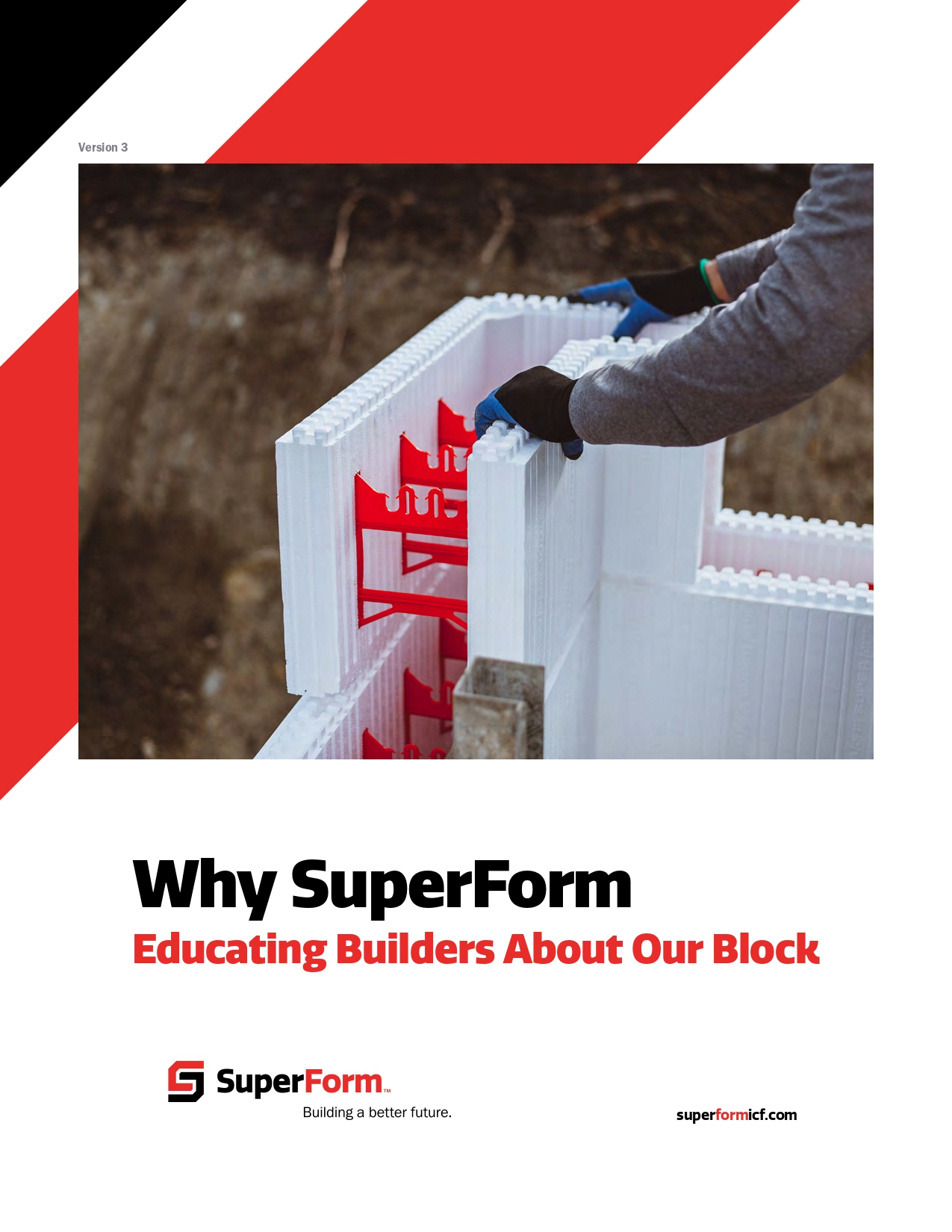
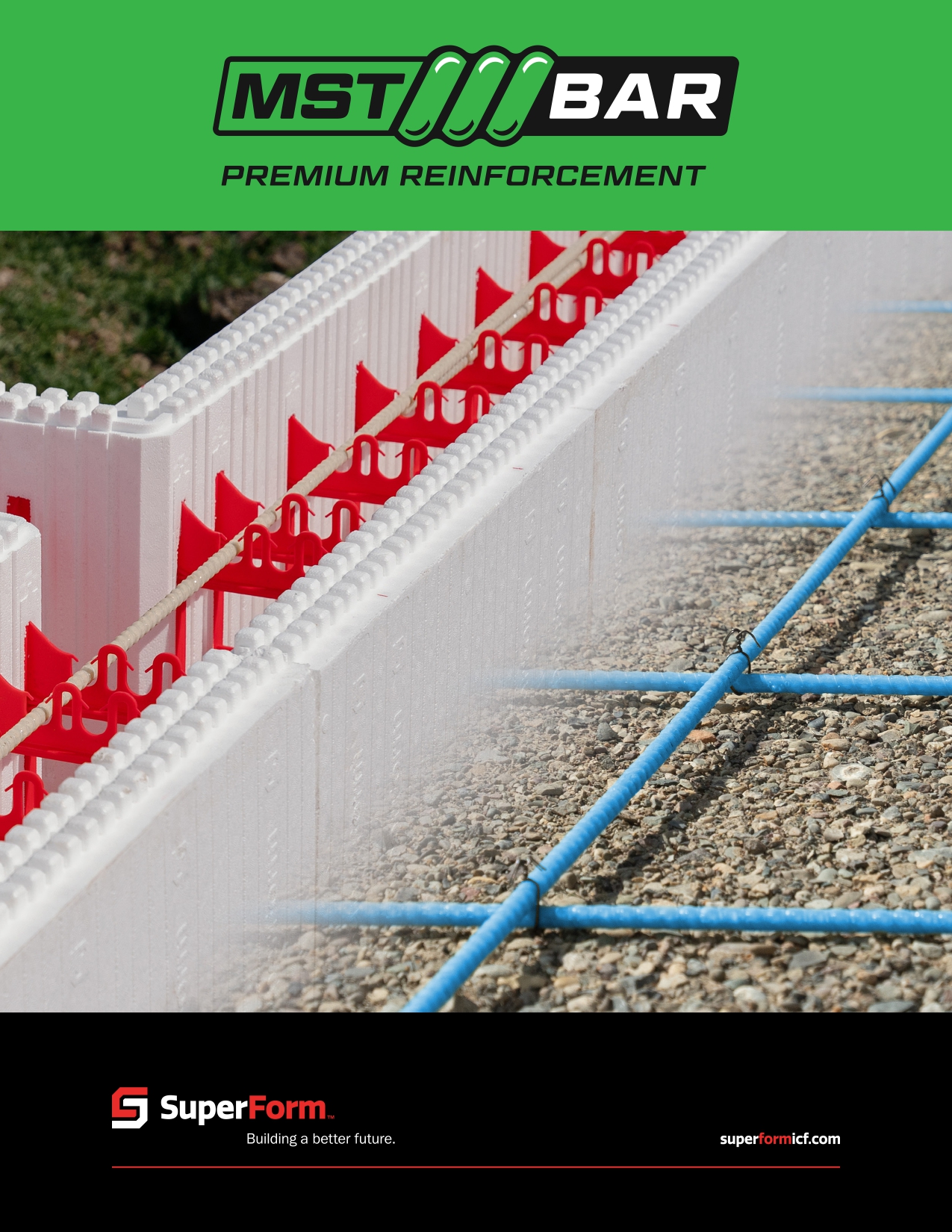
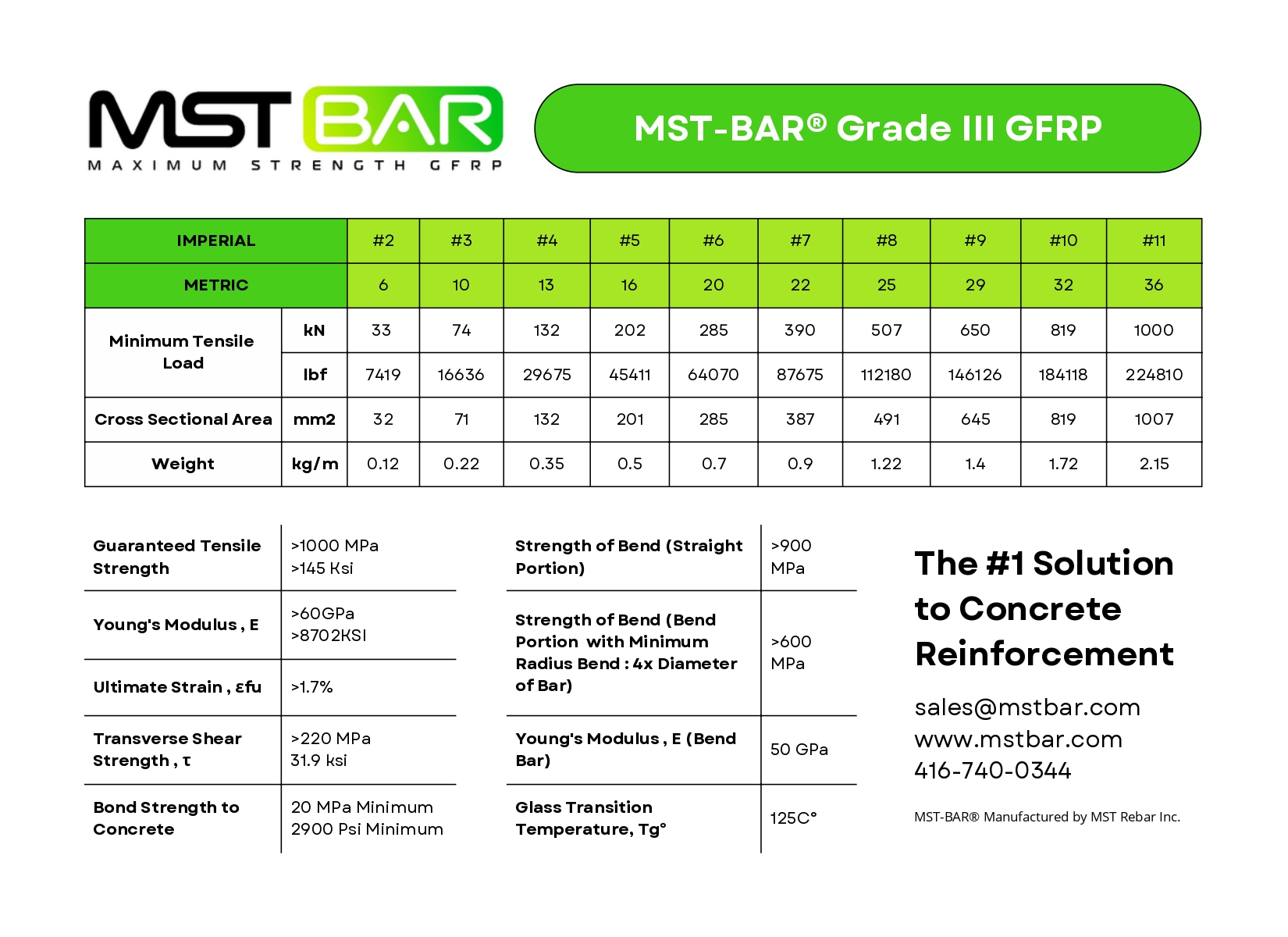
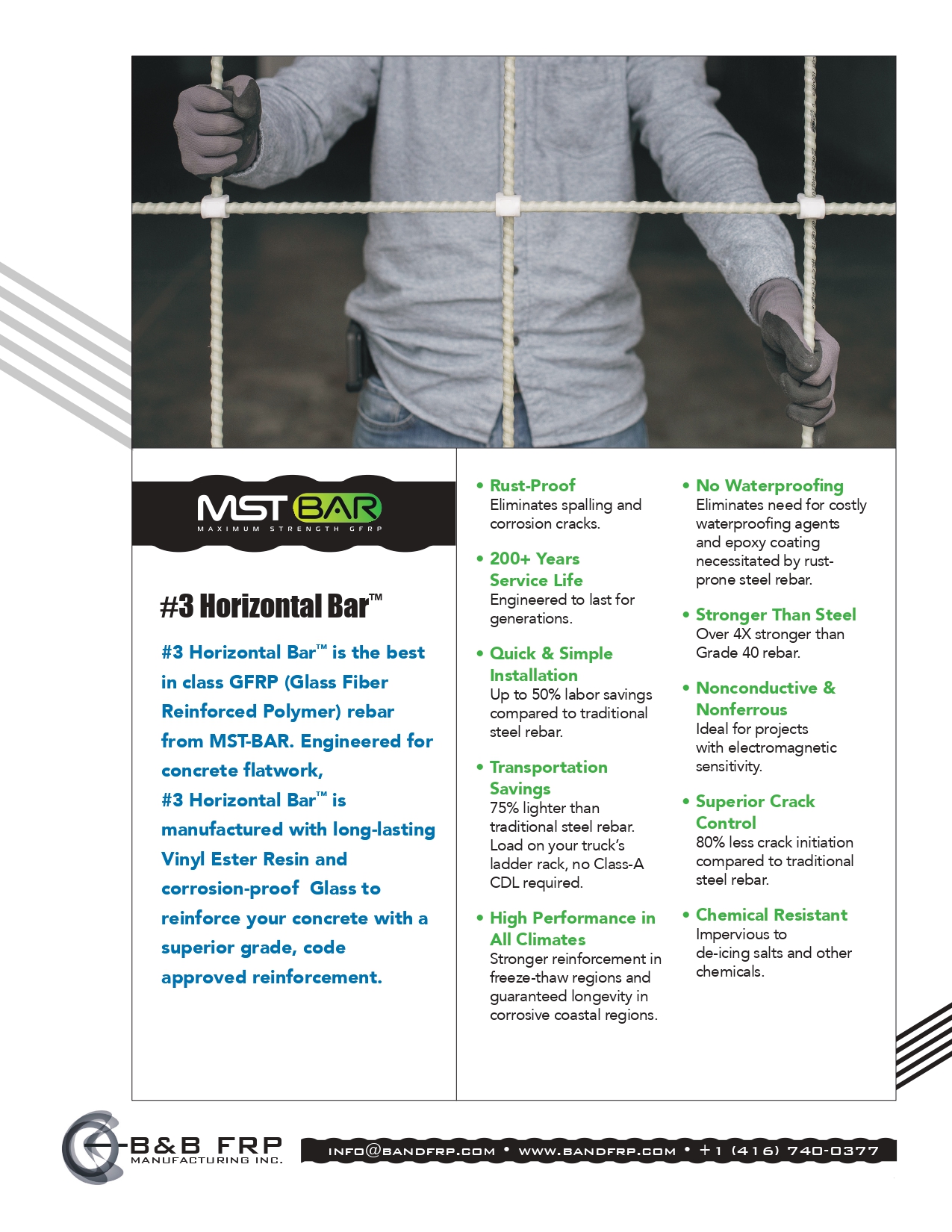
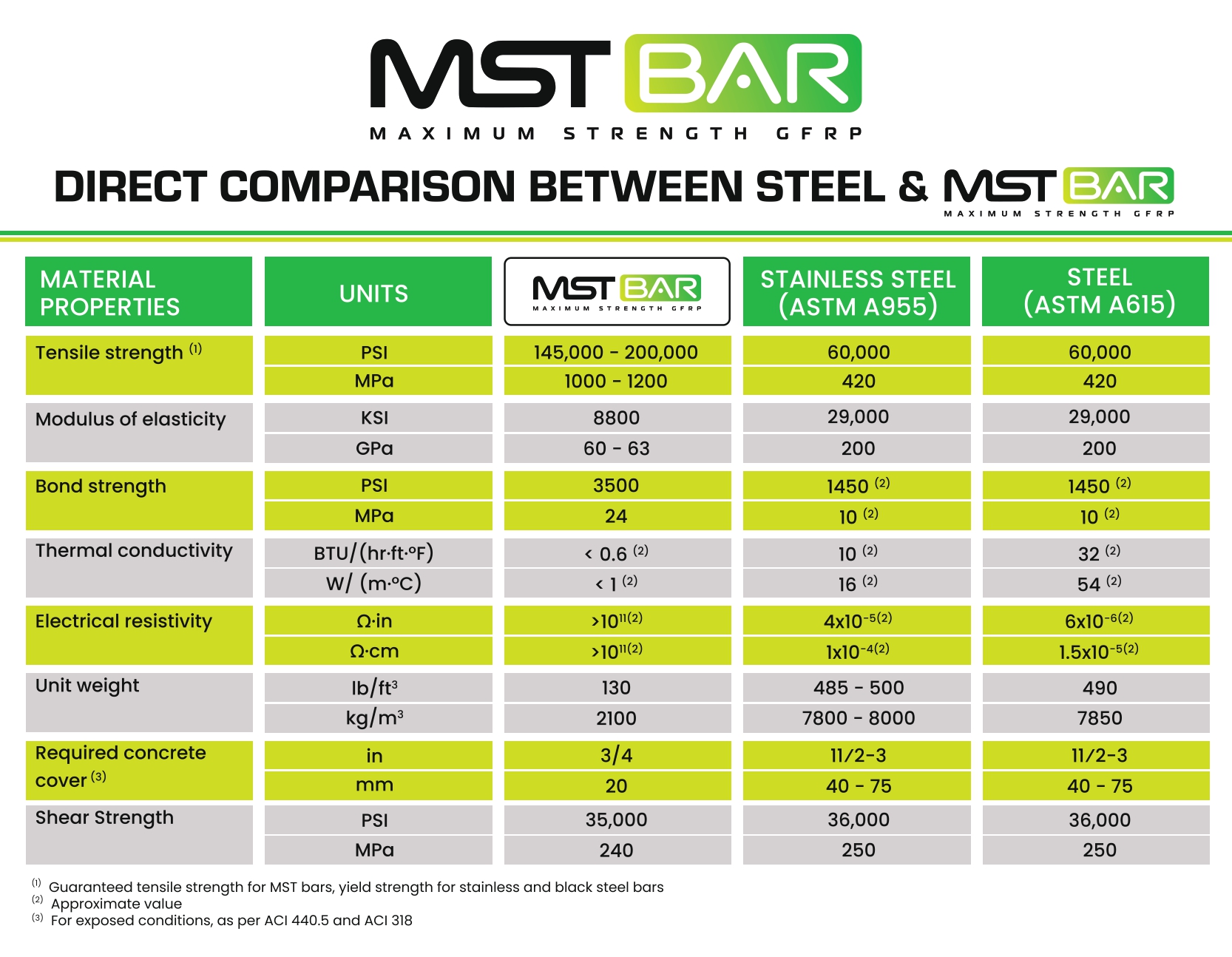
Hollow foam blocks are stacked like LEGO, reinforced with steel or MST-BAR rebar, and filled with concrete. The foam stays in place as insulation on both sides. The result is a solid concrete home wrapped in insulation.
A continuous reinforced-concrete wall instead of wood studs.
Concrete and foam block far more outside noise than a framed wall.
Insulation on both sides of the concrete, with no gaps, keeps the Florida heat out.
A solid concrete core that doesn't burn.
There's no wood in the walls.
Talk to us — tell us about your lot, your plans and your timeline.
We supply SuperForm and support your builder or one of our authorized installers.
Your home goes up — often faster than block or wood once the crew is on site.
Usually a little more up front than wood frame. A HUD study put the wall system at about 5-10% of the house construction cost. Owners make some of that back through lower energy bills.
Yes. SuperForm blocks have built-in fastening strips every 6 inches.
Yes. Lines are cut into the foam and covered with drywall.
Ask your insurer. Many look favourably on concrete homes, but we don't promise savings.
Yes, and we'll support them.
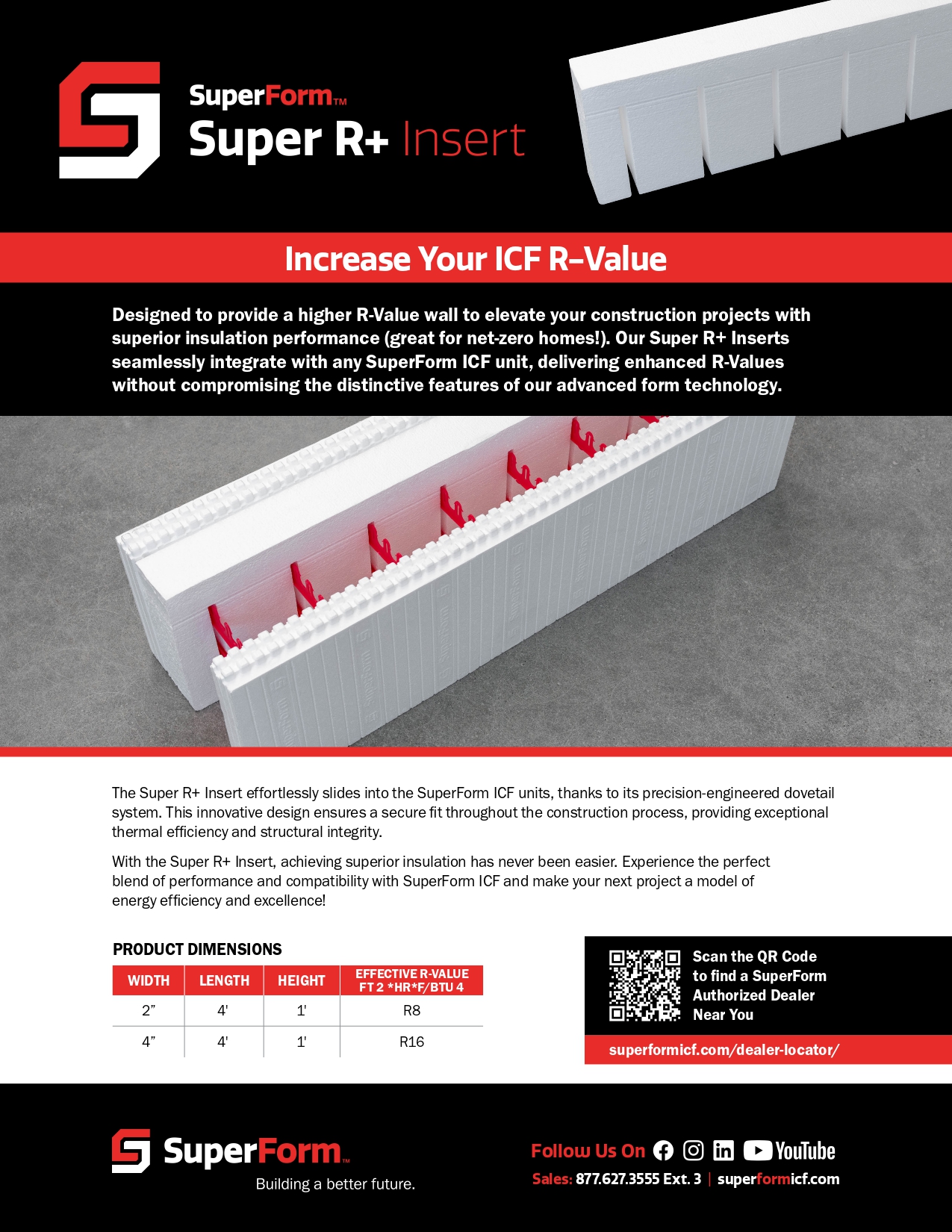
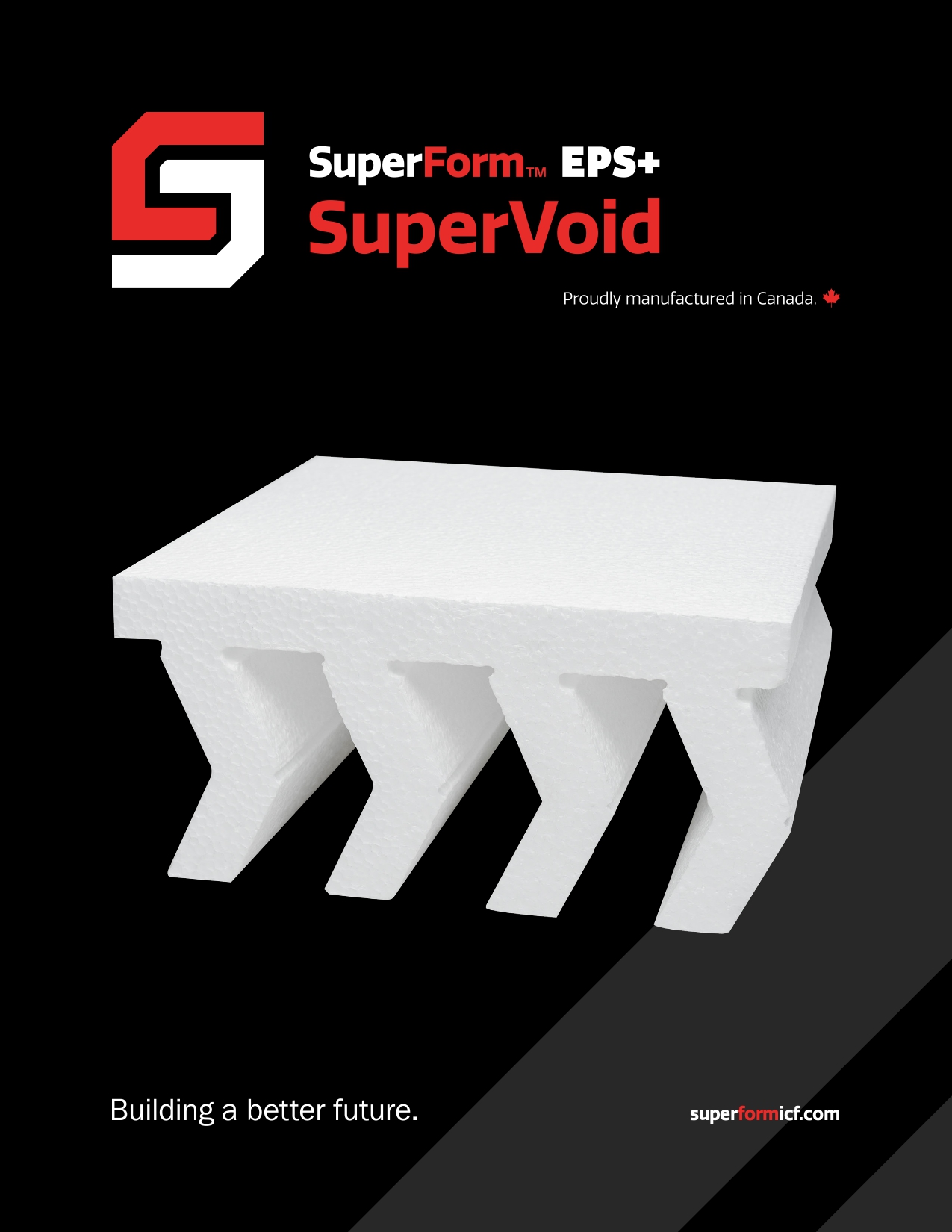
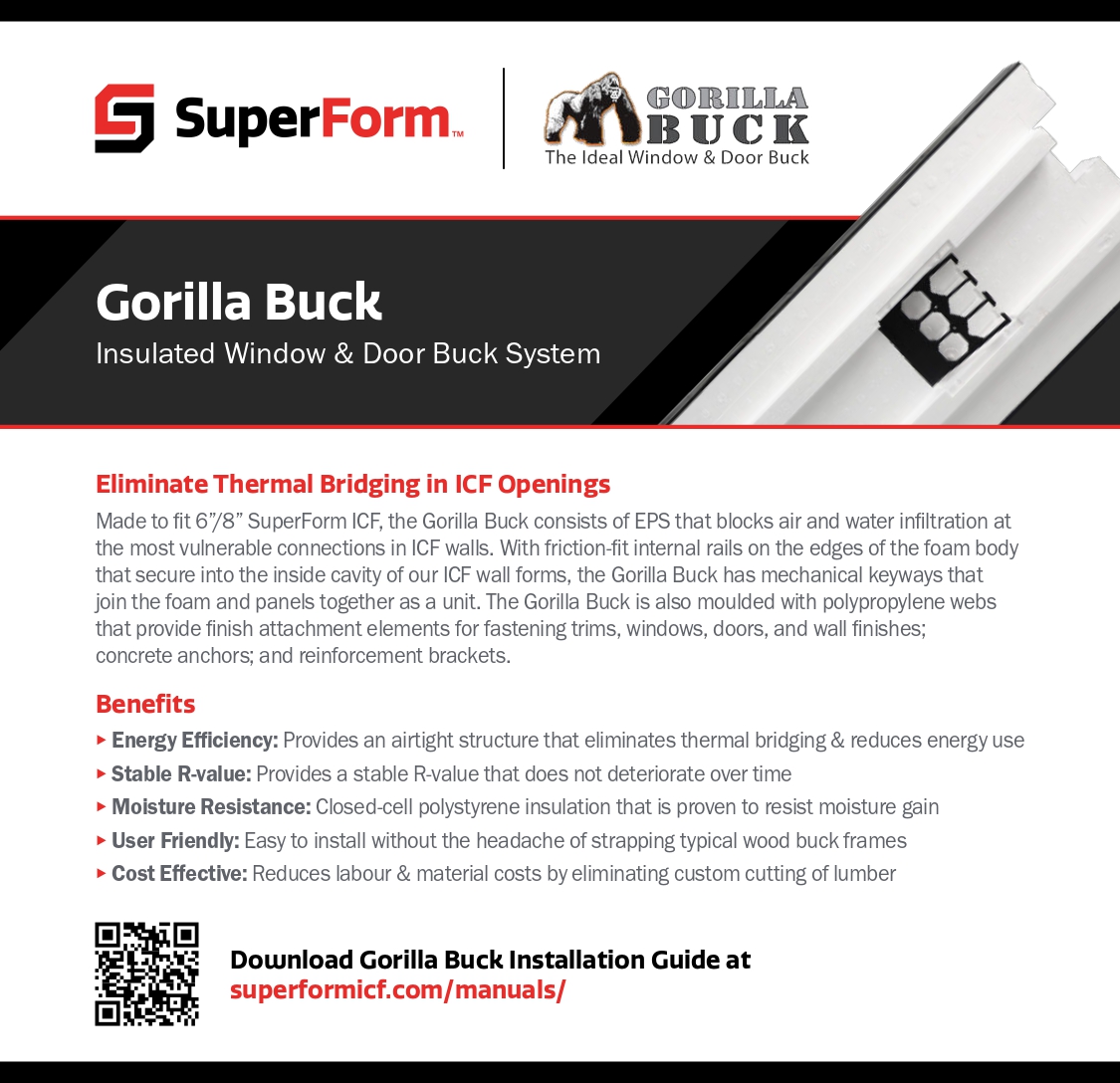


SuperForm-Frost-Impact-Board_page-0001.jpg)
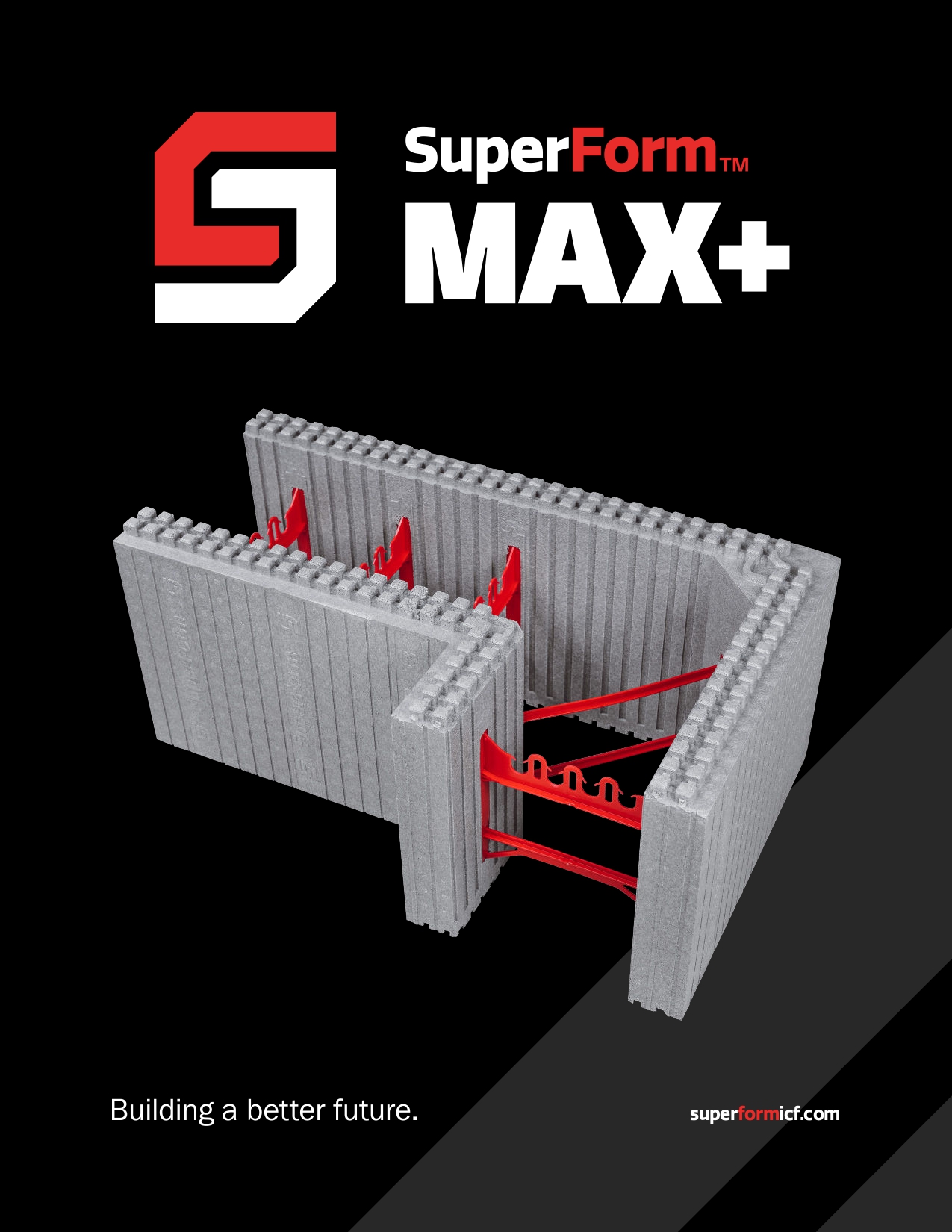
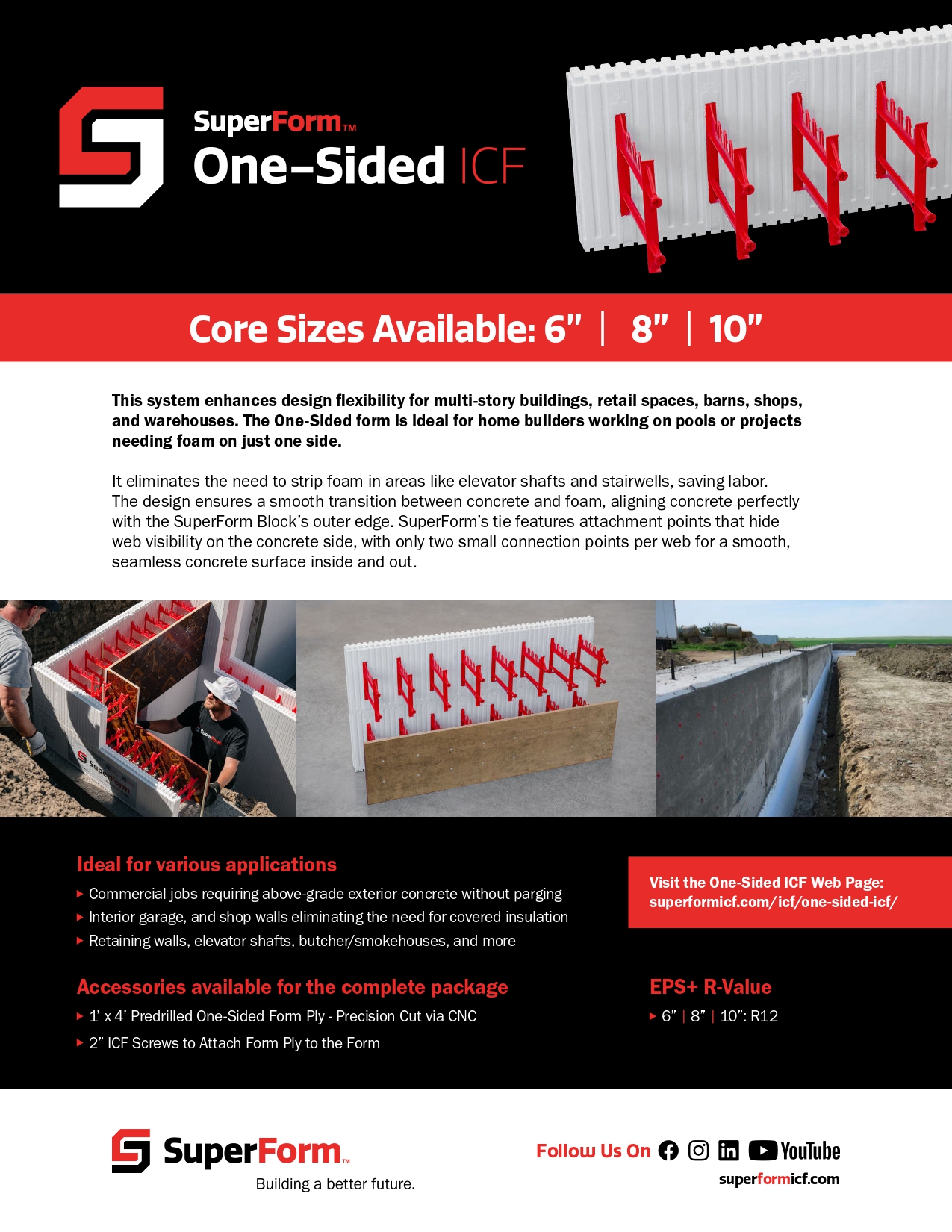





SuperForm-Foundation_Guide_2020_page-0001.jpg)



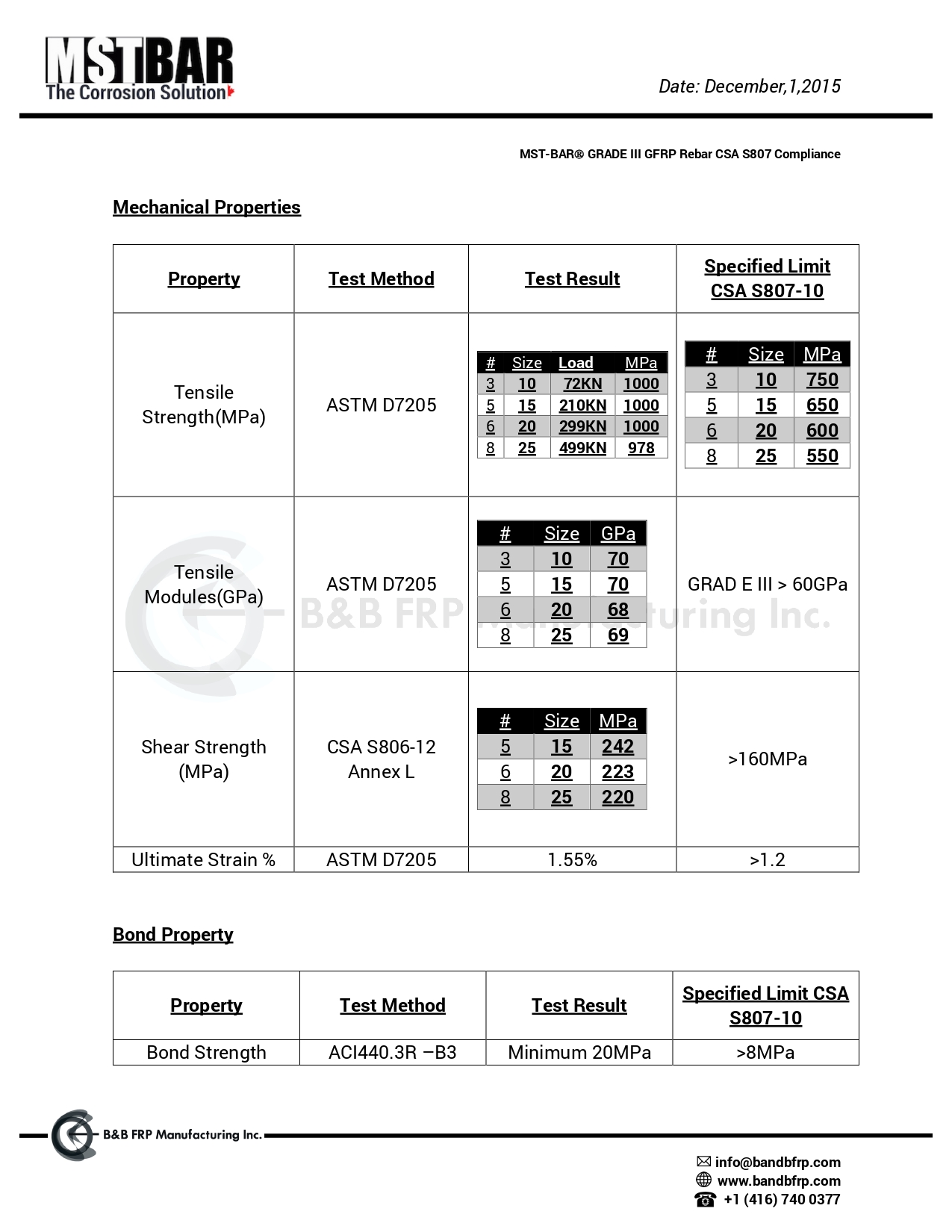
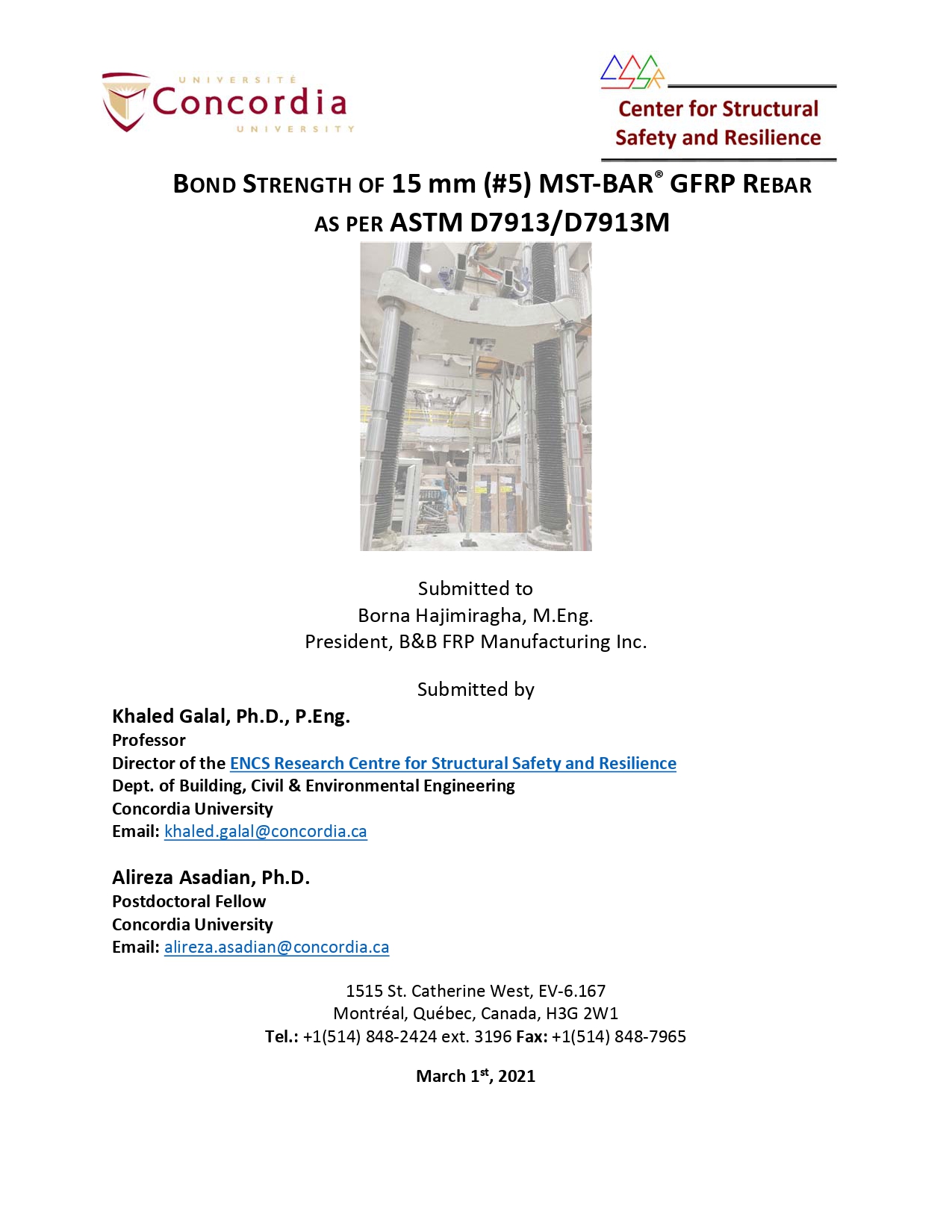
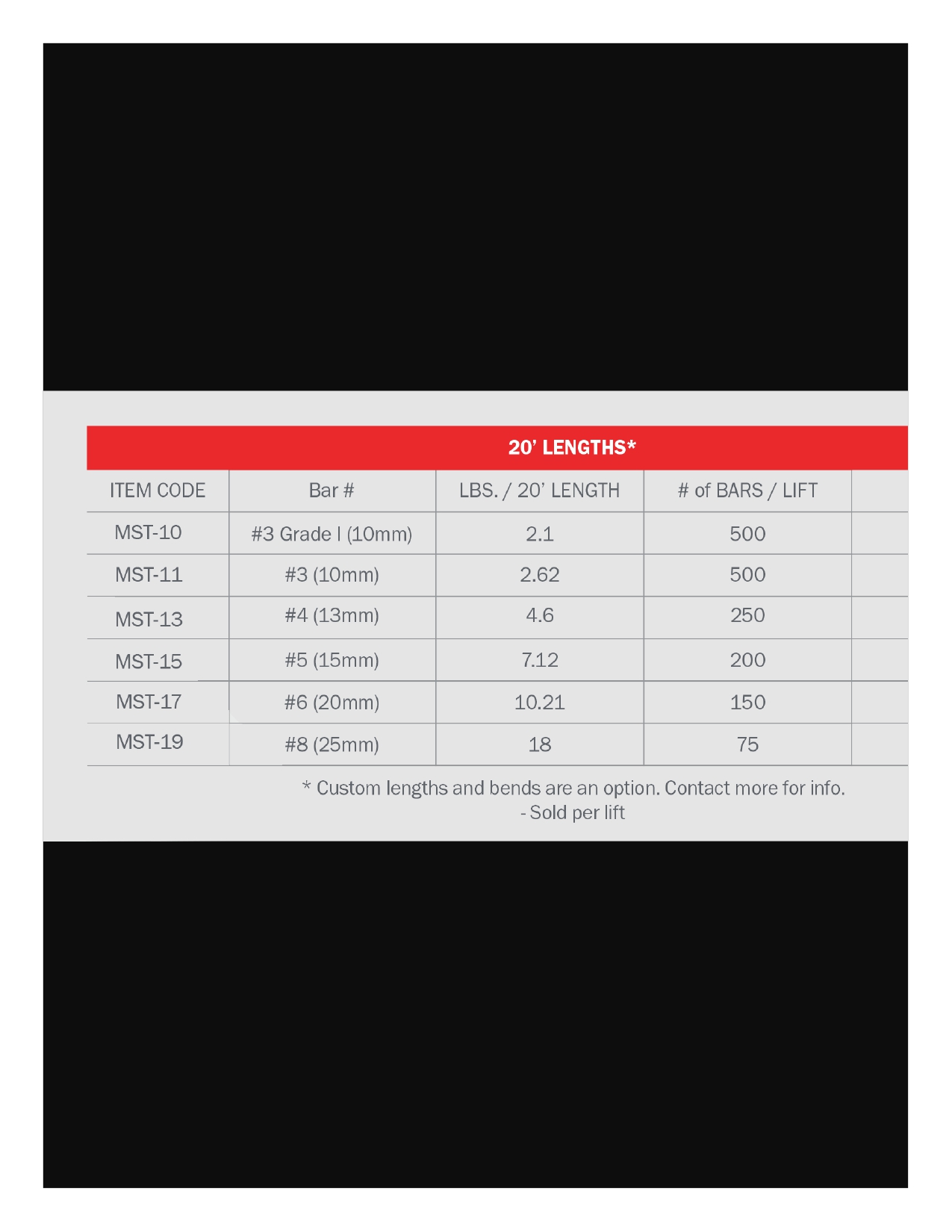
MST-BAR-Full-Submission-40C_page-0001.jpg)