Why More Homeowners and Developers Are Choosing ICF Construction in 2026
The Future of Stronger, Smarter, and More Resilient Buildings
As extreme weather events become more frequent and energy costs continue to rise, homeowners, developers, and commercial property owners are searching for better ways to build. Traditional wood-frame construction has served the industry for decades, but today's challenges demand a stronger, more efficient solution.
That's where Insulated Concrete Form (ICF) construction is changing the game.
At DCL Fortress ICF Inc., we believe buildings should be designed not only for today's needs but also for tomorrow's challenges. ICF technology provides superior strength, energy efficiency, and long-term durability, making it one of the fastest-growing building methods worldwide.
What Is ICF Construction?
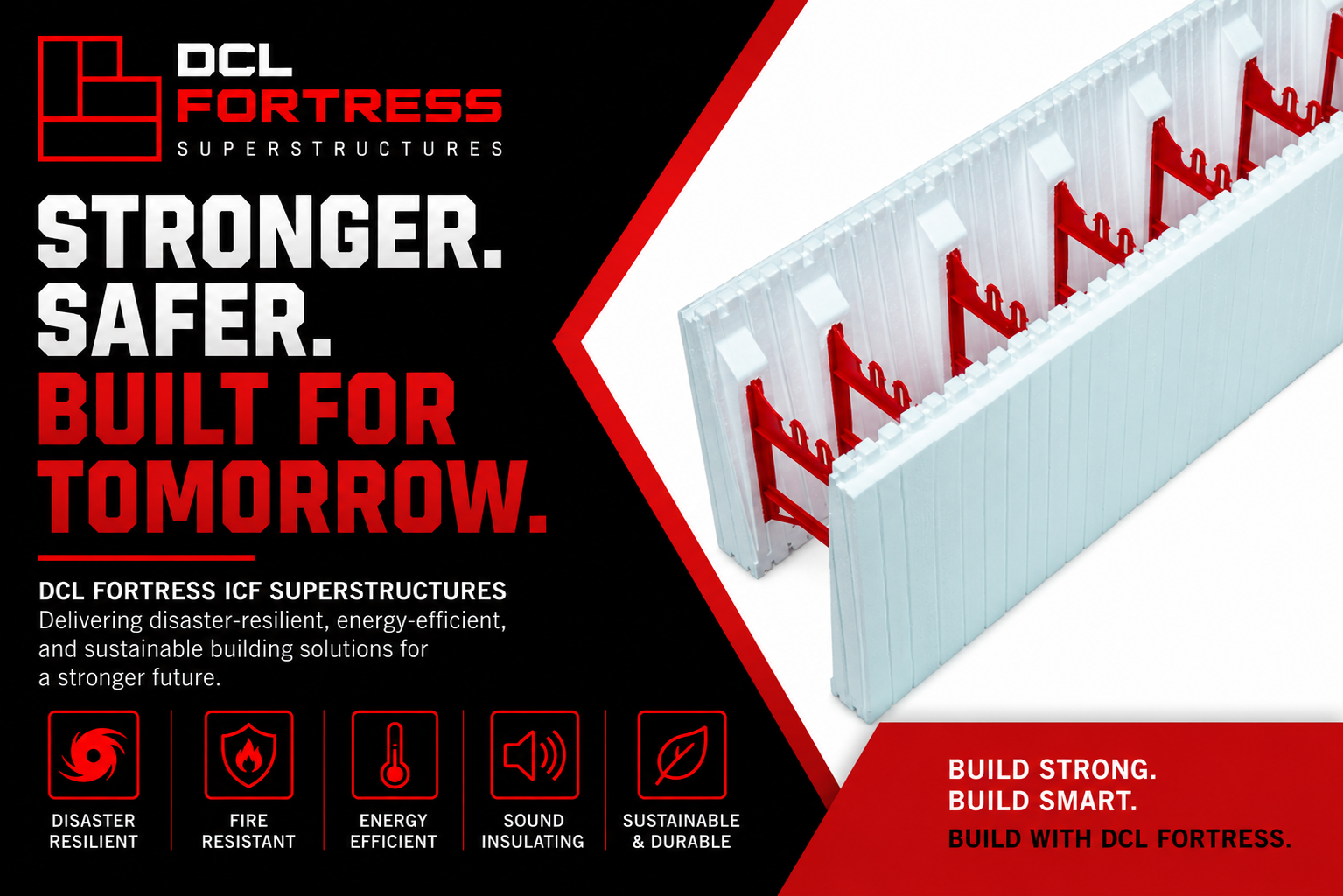
Insulated Concrete Forms (ICFs) are interlocking forms made from high-performance insulation panels that are filled with reinforced concrete. Once the concrete cures, the forms remain in place, creating a continuous insulated wall system.
Unlike traditional construction methods, ICF walls combine:
- Structural concrete strength
- Continuous thermal insulation
- Air-tight building performance
- Enhanced disaster resistance
The result is a building envelope that outperforms conventional construction in nearly every category.
1. Superior Protection Against Extreme Weather
Climate change is increasing the frequency and severity of hurricanes, floods, high winds, and severe storms.
ICF structures are engineered to withstand:
✔ Hurricane-force winds
✔ Flying debris impacts
✔ Severe storm conditions
✔ Extreme temperature fluctuations
✔ Fire exposure
The reinforced concrete core provides exceptional structural integrity, helping protect families, businesses, and investments when weather conditions become unpredictable.
Learn how ICF technology contributes to safer and stronger homes in our article Building with ICF for Safer, Stronger Homes.
2. Significant Energy Savings
One of the biggest advantages of ICF construction is energy efficiency.
Traditional wall systems often allow heat transfer through studs, gaps, and insulation inconsistencies. ICF walls create a continuous thermal barrier that dramatically reduces energy loss.
Benefits include:
- Lower heating costs
- Reduced cooling expenses
- Improved indoor comfort
- Consistent interior temperatures
- Reduced HVAC system strain
Many building owners experience substantial reductions in monthly utility bills compared to conventional construction methods.
Modern ICF systems help homeowners reduce heating and cooling expenses while maintaining year-round comfort. Learn more about the advantages of energy-efficient building systems through DCL Fortress construction solutions.
3. Enhanced Fire Resistance
Wildfires and structural fires continue to pose significant risks across many regions.
Concrete is naturally non-combustible, and ICF wall systems can provide significantly greater fire resistance than traditional wood-framed construction.
For property owners, this means:
- Increased occupant safety
- Greater asset protection
- Potential insurance benefits
- Reduced fire-related damage risks
4. Improved Sound Insulation
Noise pollution affects both residential and commercial properties.
ICF walls create an effective sound barrier that helps block:
- Traffic noise
- Construction noise
- Aircraft noise
- Neighborhood disturbances
This makes ICF construction particularly attractive for:
- Luxury homes
- Multi-family developments
- Hotels
- Schools
- Healthcare facilities
- Office buildings
5. Long-Term Durability and Lower Maintenance
Buildings are long-term investments. Choosing the right construction method can significantly impact maintenance costs over the life of a structure.
ICF construction offers:
- Resistance to rot
- Resistance to mold growth
- Protection against termites and pests
- Reduced structural deterioration
- Extended building lifespan
Because concrete does not warp, twist, or decay like traditional framing materials, property owners often experience lower maintenance requirements over time.
Many homeowners wonder whether concrete structures develop structural cracks over time. We address this common concern in our article Do ICF Homes Crack? Debunking the Myth.
6. Sustainable and Environmentally Responsible Building
Sustainability is becoming a priority for developers, municipalities, and homeowners alike.
ICF construction contributes to sustainability goals through:
- Reduced energy consumption
- Lower carbon footprint during building operation
- Longer building life cycles
- Reduced material waste
- Improved building performance
The energy savings generated throughout the life of the structure can significantly outweigh the environmental impact of initial construction.
Why the Construction Industry Is Moving Toward Resilient Building Systems
The conversation is no longer just about building faster or cheaper.
Today, it's about building:
- Stronger
- Safer
- Smarter
- More sustainable
- More resilient
As weather patterns evolve and energy costs continue to increase, resilient construction solutions are becoming a necessity rather than a luxury.
ICF technology is helping shape the future of modern construction by delivering performance that traditional building methods struggle to match.
Build for the Future with DCL Fortress ICF
At DCL Fortress ICF Inc., we specialize in disaster-resilient construction solutions engineered to meet the demands of a changing world.
Whether you're planning a residential project, commercial development, or climate-resilient infrastructure, our team can help you explore how ICF technology can deliver lasting value, superior protection, and long-term performance.
Ready to build stronger?
Contact DCL Fortress ICF today to learn how our advanced ICF building systems can help protect your investment for decades to come.